Blizzard hitting hard? Don’t wait. The next couple of hours can make the difference between a normal storm day and frozen pipes, basement flooding, or electrical hazards. Here’s what to do in 30 minutes or less.
The 3 Threats (and how to stop them fast)
THREAT #1: FROZEN PIPES
What happens: Pipes freeze → pressure builds → pipes can burst → repairs can cost thousands.
Do this RIGHT NOW (10 minutes):
- Set your thermostat to 65°F (18°C) minimum and keep it steady.
- Open cabinet doors under sinks (especially on exterior walls) so warm air reaches pipes.
- Let faucets run at a slow trickle (a thin stream is enough).
- Keep interior doors open so heat circulates (including basement/utility areas).
THREAT #2: HEAT PUMP / OUTDOOR HVAC UNIT (ONLY if you have one)
Most homes aren’t worried about “AC” in a snowstorm—they’re worried about heat. If your home uses a heat pump, the outdoor unit needs airflow to keep heating properly.
Do this RIGHT NOW (10–15 minutes):
- Gently clear snow from around the outdoor unit using a soft broom/brush.
- Keep 2–3 feet of clearance around the unit so it can “breathe.”
- Don’t pour hot water on it.
- Don’t chip ice with tools—if ice is heavy, call a pro.
✅ If your heat pump stops heating or keeps shutting off:
Triple A Plaza can troubleshoot HVAC/heat pump problems during storm conditions.
THREAT #3: WATER + ELECTRICAL HAZARDS
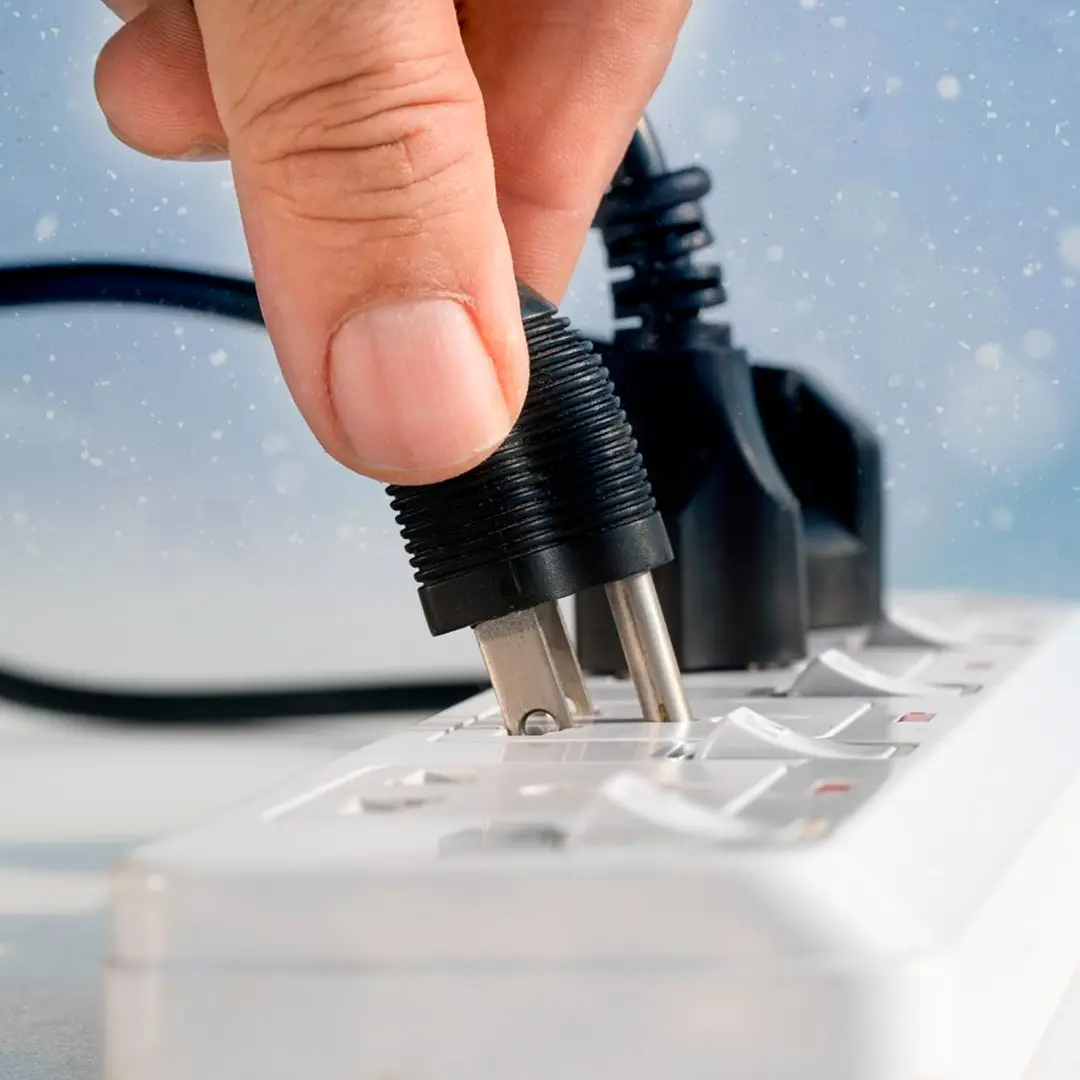
What happens: Snow melt or leaks reach outlets/panels → shock/fire risk.
Do this RIGHT NOW (10 minutes):
- Identify your main electrical panel and know how to access it safely.
- If you see water near outlets/equipment, do not touch wet areas.
- Turn off power only if you can do it safely without standing near water.
- If water is reaching electrical components or the panel area, call a licensed electrician immediately.
Monitor these 4 things every few hours (5 minutes)
While the storm continues, check:
- Faucets still trickling? If water slows/stops, pipes may be freezing.
- Outdoor heat pump unit clear? Remove new buildup gently (if safe).
- Any water near outlets/panel? Don’t approach—cut power safely or call help.
- Thermostat steady at 65°F+? Make sure heat is running consistently.
RED FLAGS: Call a pro immediately
Stop and call for help if you see ANY of these:
🚨 PIPES
- Little/no water coming from faucets
- Visible frost/ice on pipes
- Wet spots on ceilings/floors/walls
- Signs of a leak starting (damp smell, dripping, stains)
🚨 ELECTRICAL
- Burning smell near outlets/panel
- Buzzing from outlets/switches
- Breaker keeps tripping and won’t stay on
- Water actively entering electrical areas
🚨 HEAT
- Furnace/heat pump won’t start
- Heat keeps shutting off
- No warm air from vents even though the thermostat is on
After the storm (next 12–24 hours)
- Walk through the home: check for water stains, damp spots, musty smells (basement/crawlspace/attic).
- Test faucets: pressure should be normal—call a plumber if pressure is off or water looks discolored.
- Clear remaining snow around the outdoor heat pump unit (if you have one).
- If a breaker trips again after reset, don’t keep resetting—call an electrician.
What NOT to do
❌ Turn off heat “to save money” (frozen pipes cost far more)
❌ Use a heat gun/hair dryer on pipes (risk damage/injury—call a plumber)
❌ Pour hot water on the outdoor HVAC unit
❌ Touch wet electrical areas
❌ Run a generator indoors or near doors/windows (serious CO risk)
Need help right now? Call Triple A Plaza
If your heat stops, your appliances won’t restart after an outage, or you need a professional inspection/repair, contact us:
NY: (718) 560-3131
NJ: (201) 538-7149
Bilingual support available (English / Español).