
Refrigerator Ice Maker Not Working? 7 Things to Check Before You Call for Repair
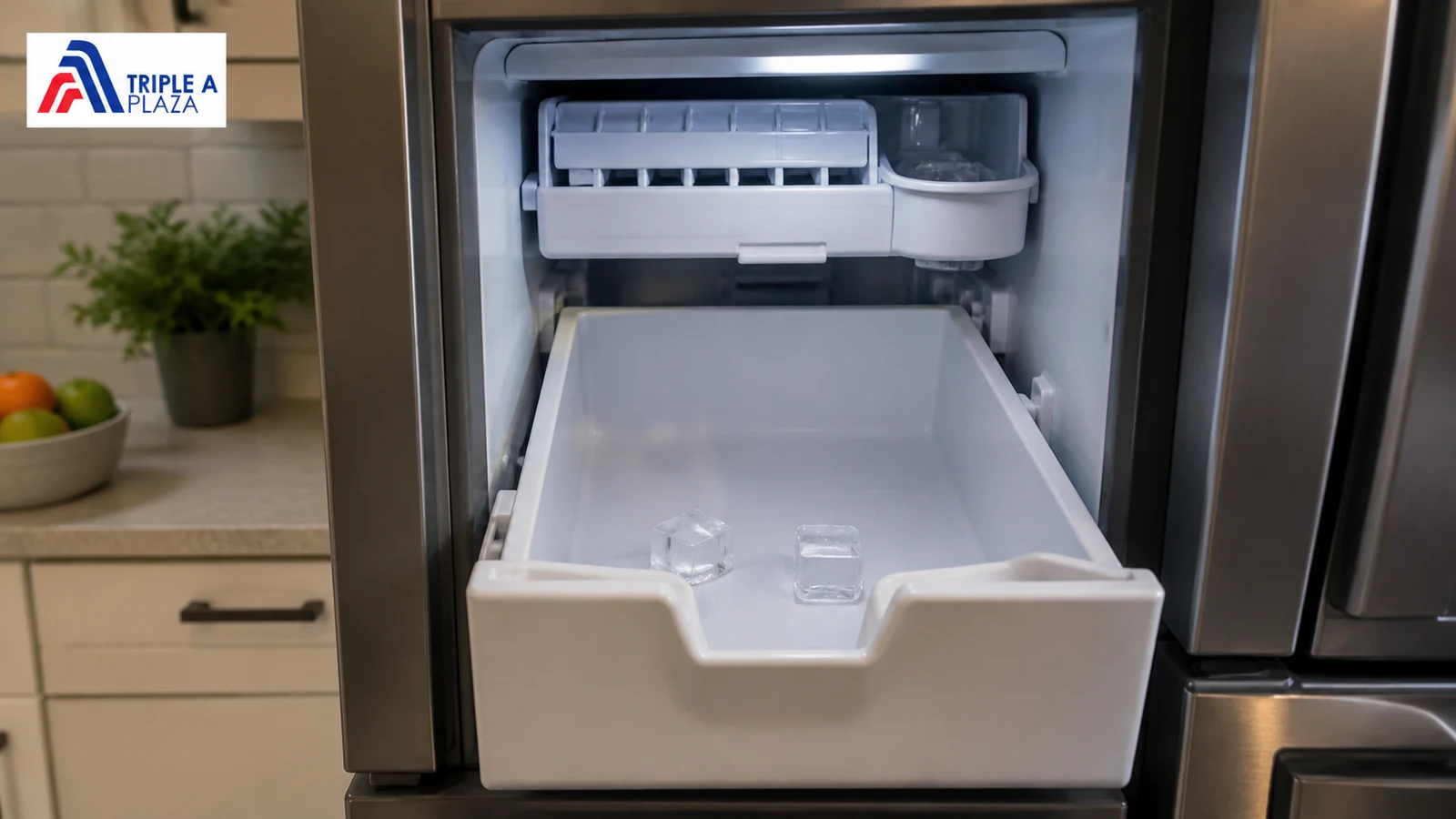
When a refrigerator ice maker is not working, the cause is not always the ice-maker assembly itself. Temperature, water flow, a clogged filter, an incorrect control setting, or a blocked ice bin can all interrupt production. A few safe checks can help you describe the problem accurately and avoid ordering the wrong part.
This guide explains what homeowners in New York and New Jersey can check before requesting service. Because controls and reset procedures vary by brand and model, keep your owner's manual nearby and never force a moving component.
First, identify what the ice maker is doing
“Not working” can describe several different symptoms. Before you try to fix the ice maker, note which one matches your refrigerator:
The ice bin stays completely empty.
The unit makes ice, but much more slowly than before.
The cubes are unusually small, hollow, or misshapen.
The tray fills, but the cubes do not release into the bin.
The dispenser does not release ice even though the bin is full.
Water leaks or freezes around the fill tube or ice-maker compartment.
Those symptoms point to different systems. An empty bin may involve water supply or temperature, while a full bin that will not dispense may involve the chute, auger, controls, or a jam.
7 safe checks when your refrigerator ice maker is not working
1. Confirm that the ice maker is turned on
Many refrigerators have a physical switch, control arm, touch-panel setting, or “Ice On/Ice Off” option. Make sure the control is on and that the panel is not locked. If the refrigerator was recently cleaned, moved, or reset, the setting may have changed without anyone noticing.
2. Allow enough time after installation, a power interruption, or a filter change
A newly installed refrigerator needs time to reach its operating temperature before it can produce ice. Production can also pause after a long outage, a control reset, or service involving the water system. Follow the waiting period in the owner's manual instead of repeatedly resetting the appliance.
3. Check the freezer temperature and door closure
An ice maker depends on the freezer maintaining the temperature specified for that model. If frozen food feels soft, frost is building around the door, or the temperature changes throughout the day, the larger cooling problem may be preventing ice production. Confirm that packages are not blocking vents and that the door closes fully against the gasket.
4. Verify the water supply
Confirm that the shutoff valve supplying the refrigerator is open. Look behind the unit only if it is safe to do so, and check for an obvious kink or pinch in the water line. Do not pull hard on plastic or braided lines, and shut off the water if you find an active leak.
5. Check water flow and the filter
A restricted or incorrectly installed filter can reduce water flow to the ice maker. If your refrigerator also has a water dispenser, compare its current flow with normal operation. Check the filter's installation date and replace it only with the correct part listed for the model. After replacement, follow the manufacturer's flushing instructions.
6. Inspect the ice bin for a jam or incorrect position
Remove and reinstall the ice bin according to the manual. Clumped ice, a bin that is not seated correctly, or ice caught near a sensing arm can interrupt production or dispensing. Let frozen buildup thaw safely; do not use sharp tools, boiling water, or force inside the compartment.
7. Record error codes, sounds, and timing
Write down any display code and note whether you hear the ice maker cycle, water enter, or the dispenser motor run. Also note when the problem began and whether it followed a filter change, move, outage, or plumbing work. These details help a technician distinguish an ice-maker failure from a valve, sensor, fan, control, or cooling issue.
Can you fix an ice maker yourself?
You can safely correct simple issues such as an off setting, a blocked bin, a closed water valve, or an overdue filter when the owner's manual provides the procedure. Stop if diagnosis requires removing electrical panels, testing live voltage, forcing a harvest cycle, disconnecting pressurized water fittings, or accessing sealed cooling components.
People searching for how to fix an ice machine should also confirm what appliance they own. A refrigerator ice maker and a standalone commercial or under-counter ice machine use different components and diagnostic procedures.
When should a professional repair the ice maker?
Request professional diagnosis when basic checks do not restore normal operation or when the problem points beyond routine maintenance. Common warning signs include:
The freezer is not holding a stable temperature.
The water dispenser works, but the ice maker never fills or cycles.
The fill tube freezes repeatedly.
Water leaks inside or behind the refrigerator.
The ice maker makes unusual grinding or repeated clicking sounds.
An error code returns after the model-specific reset procedure.
The correct filter, settings, water supply, and waiting period have already been confirmed.
A technician can test the inlet valve, ice-maker motor and sensors, wiring, controls, fan operation, temperature performance, and model-specific service information before recommending a part. That diagnostic step matters because replacing the ice-maker assembly will not solve a water-pressure, cooling, or control problem.
Ice-maker repair in New York and New Jersey
Triple A Plaza provides refrigerator repair and ice-maker diagnosis for homes and properties throughout New York and New Jersey. We service common refrigerator configurations and can help identify the correct parts path after testing the actual cause.
If you have an LG refrigerator, visit our LG appliance repair page for additional product and service information. To schedule a diagnosis, request refrigerator service and include the brand, model number, error code, and a short description of what the ice maker is doing.
Frequently asked questions
Why is my ice maker not making ice even though the water dispenser works?
The dispenser and ice maker share parts of the water system but do not use every component in exactly the same way. The problem may involve the ice-maker control, fill valve circuit, fill tube, temperature, sensor, wiring, or ice-maker assembly.
Can a water filter stop an ice maker from working?
Yes. A clogged, incorrect, or improperly seated filter can restrict flow. Check the model's approved filter and installation procedure before assuming the ice maker needs replacement.
How long should I wait after turning the ice maker back on?
Waiting periods vary by refrigerator and by what caused the interruption. Follow the owner's manual for your model; recently installed or warmed refrigerators generally need more time than a unit that was switched off briefly.
Is it worth repairing a refrigerator ice maker?
That depends on the refrigerator's overall condition, the failed component, part availability, and the estimated repair. A proper diagnosis should come before the repair-or-replace decision.
Need help with your appliance?
Our certified technicians serve homes and businesses across New York and New Jersey — one team for both states.